

In 2022, the beer market boasted a staggering value exceeding $100 billion. The lion’s share of this substantial market revenue was attributed to prominent American beer conglomerates and imported brews. However, a noteworthy 13.1% slice of this thriving market was carved out by craft beers, which notably included the ever-popular IPA.
Key Takeaways
- IPA, short for India Pale Ale, represents a bold and intensely aromatic genre of beer. Session IPAs boast a lower alcohol content compared to traditional India Pale Ales (IPAs).
- Session beers usually boast an ABV (alcohol by volume) of 5% or less. Frequently, though not invariably, session ales are also lower in calorie content.
Enter the Session IPA – the pint-sized dynamo within the realm of craft beer – a style that emerged seemingly overnight, making a meteoric rise in just a few hop harvests.
IPAs are celebrated far and wide for their distinctive and captivating flavor profiles. Beyond their palatable allure, these ales also have the bonus of being the life of the party, requiring only a few sips to ignite the festivities. But here’s a lesser-known fact: You can savor the enchanting world of IPAs without committing to a high alcohol-by-volume (ABV) experience.
Session IPAs, in stark contrast to their traditional India Pale Ale counterparts, boast a lower alcohol content while retaining the full spectrum of those delectable IPA flavors.
So, what precisely is a session IPA? This guide will delve deep into this intriguing question, offering a comprehensive exploration of all things IPA, sessionable brews, and the world of session IPAs. Keep reading for a complete enlightenment on the subject.
What Is Session IPA?
IPA, short for India Pale Ale, represents a bold and intensely aromatic genre of beer. It stands as one of the most fertile grounds for experimentation among craft brewers worldwide. Originating in the United Kingdom, IPAs have gained iconic status among American craft brewers, signifying excellence within the craft brewery community.
This beer variety resides at the intersection of a hoppy Venn diagram, nestled between the realms of IPA, Pale Ale, and Session Ale. It’s crafted by reducing the potency of a typical IPA, resulting in lower alcohol content and a moderated hoppy bitterness, while introducing richer malty undertones.
Hops, those essential ingredients, are derived from the flowers of the Humulus lupulus plant, a member of the Cannabaceae family, which interestingly includes cannabis and hemp. These climbing vines flourish in hop gardens, where farmers meticulously train them to ascend trellises and strings suspended above their fields, often reaching heights of up to 20 feet.
The term “session” in its name pays homage to the convivial pub tradition of enjoying a prolonged and sociable drinking “session,” marked by savoring multiple lower-alcohol beers over an extended period. Session beers, with their lower alcohol content and reputation for being less filling, are perfectly suited for these leisurely gatherings.
Session IPAs boast a lower alcohol content compared to traditional India Pale Ales (IPAs). Nevertheless, they retain all the delectable flavors characteristic of IPAs.
Also read: Exploring The World of the Witbier, Beer with a Tasty History
Types of IPAs
Breweries employ various hop varieties to craft the diverse array of IPA variations that have captured our collective affection. Among the multitude of IPA styles, such as English and American IPAs, three stand out as the most beloved:
- Hazy IPAs: Named for their lack of filtration, these beers retain their natural haze.
- Double or Imperial IPAs: These categories are defined by the brew’s alcohol by volume (ABV), which tends to be higher than standard IPAs.
- Session IPAs: Unlike their Imperial counterparts, the ABV of session IPAs is notably lower.
What Is Session Ales
The term “Session” in beer parlance originates from the ability to enjoy multiple of these brews during a single drinking “session.”
Session beers usually boast an ABV (alcohol by volume) of 5% or less. Frequently, though not invariably, session ales are also lower in calorie content, ensuring you won’t feel overly satiated after indulging in a few.
Breweries have the creative freedom to craft session beers from a wide spectrum of beer styles. Pilsners, blondes, and lagers are among the more common varieties, but hefeweizens and pale ales can also qualify as sessionable libations.
How Are Session IPAs Brewed?

To brew this IPA, start by mashing crushed grains in 3.5 gallons of water at a temperature range of 153-155°F, and let it sit for 60 minutes. Afterward, sparge the grain with 170°F water until you reach your desired pre-boil kettle volume.
Next, bring the mixture to a boil and introduce the 60-minute hops. Allow it to boil for 40 minutes before adding the 20-minute hops. Continue boiling for an additional 19 minutes, and then add the 1-minute hops. Let it boil for just 1 more minute.
Turn off the heat and efficiently cool the wort down to 66°F. Once it reaches the desired temperature, transfer it to your fermenter. To ensure a speedy and flavor-optimized fermentation process, pitch a healthy starter of your preferred IPA yeast.
Also read: What Is Kölsch Beer: One of the Best German Style Beer
The difference Between Session IPA and IPA is
Two primary differentiators set session IPAs apart from regular IPAs:
1. Alcohol Content
As previously mentioned, session IPAs boast a lower alcohol by volume (ABV) compared to their traditional IPA counterparts. Typically, standard double IPAs fall within the alcohol content range of 6% to 8%, while some regular IPAs, particularly triple IPAs, can soar above 10% ABV. On the flip side, session IPAs tend to hover between 6.5% and 8% ABV. This reduced alcohol content might potentially lead to a brew that’s overly hoppy and less sweet. However, session beer artisans employ a special brewing approach to ensure that session IPAs and traditional IPAs deliver equivalent flavor profiles.
2. Brewing Method
You may wonder how session IPAs manage to maintain their delectable taste despite having varying alcohol levels. The secret lies in the brewing process itself. The alcohol content is not determined by hops; instead, they serve as flavor-enhancing elements added towards the end of brewing. It’s the reduced malt and grain content that results in the lower alcohol content in session IPAs. To prevent the hops from overpowering the malt nuances, session beer crafters employ a diverse range of malts to infuse depth and intricacy into the brew, ensuring that the flavors remain robust and balanced.
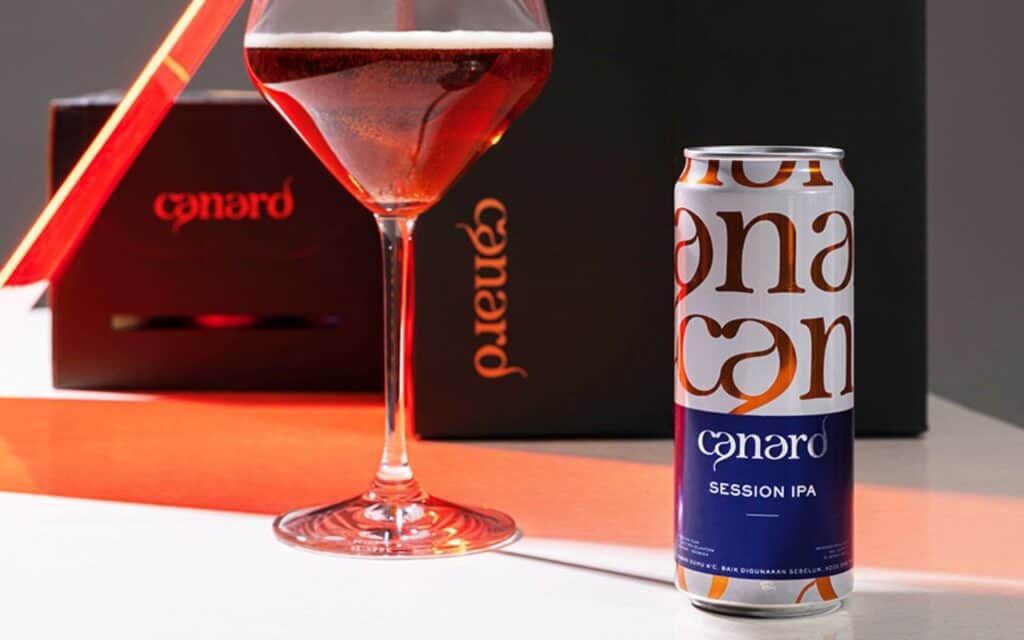
At Canard, we’ve crafted a clear, amber-toned IPA that falls into the “sessionable” category, offering a lower alcohol content suitable for extended sipping. Our Canard Session IPA stands out as a refreshingly hoppy and pleasantly bitter pale ale, characterized by a hop-forward profile, a dry finish, and a subtle hint of caramel and malty notes. The hop aromas take center stage in the new world style, showcasing vibrant hints of citrus, floral, stone fruit, and pine resin. Visit our website to find more about Session IPA. Here’s the link!
The wheat beer family stands as a venerable lineage of brews with deep medieval origins, ideally suited for the warm embrace of summer. Among its illustrious members, we find Witbier.

Key Takeaways
- Witbier is brewed using a blend of pale barley malt, unmalted wheat, and oats, resulting in a smooth and creamy texture. This spiced brew boasts hints of coriander and citrus, with a touch of lactic acidity.
- Witbier was crafted using specific combinations of herbs and spices to harmonize with the malt’s sweetness.
Witbier, also recognized as white beer, emerges as a refreshingly distinctive Belgian beer variant, gaining a global following. Many inquire about the distinctions among wheat beer styles, specifically Witbier, Hefeweizen, and “American” wheat beer. Although they may share some resemblances, these styles harbor notable differences.
Within this blog post, we shall embark on a journey into the core of Witbier, the essence of witbier, explore its definition, and highlight the key differences between witbier and wheat beer.
What Is Witbier in the Beer Family
Witbier is a traditional Belgian style type of beer tracing its roots to the Middle Ages, derives its name from the Dutch word “wit,” meaning “white” – a fitting description of its appearance.
Hailing from Leuven in the Flemish region of Belgium, Witbier belongs to the family of white (wit) beer styles. It’s characterized by its hazy, pale, and slightly hoppy complexion, enhanced with a medley of spices to emphasize its yeasty nature.
Typically, Witbier is brewed using a blend of pale barley malt, unmalted wheat, and oats, resulting in a smooth and creamy texture. This spiced brew boasts hints of coriander and citrus, with a touch of lactic acidity. Its unfiltered brewing process lends it cloudy and golden. Witbiers are distinguished by their bready flavor profile and generally clock in with an alcohol-by-volume (ABV) content ranging from 4.5 to 5.5%.
History of Witbier
Witbiers, a style with roots dating back to the 14th Century in Belgium. These Belgian white beers had their origins in the towns of Leuven and Hoegaarden, situated in Flemish Brabant, a central province of Belgium.
Witbier was crafted using specific combinations of herbs and spices to harmonize with the malt’s sweetness. By the 16th century, Leuven and Hoegaarden brews had gained widespread recognition, with Leuven becoming renowned and one of the best for its breweries with a large reputation for its brewery. By the 19th century, Hoegaarden had expanded its brewing influence to encompass nearly 40 breweries throughout Europe, earning a reputation for its rustic and exceptionally pale beer.
However, as hops gradually supplanted bittering herbs in the late 1800s and into the 1900s, witbiers faced the risk of fading into obscurity. It wasn’t until Pierre Celis, a milkman by trade, revived the style.
In 1965, Celis established a small brewery in his shed and meticulously perfected a witbier recipe that garnered significant acclaim. Eventually, in 1989, he introduced this revitalized witbier to Austin, Texas, where it found tremendous success among the burgeoning craft beer community.
Also read: What Is Kölsch Beer: One of the Best German Style Beer
The Difference Between Witbier and Wheat Beer
Even though they come from the same family, There are several differences between what Witbier and Wheat beer is. So what are the differences between Wheat Beer and Witbier?
American Wheat beer, often simply referred to as “wheat beer” in brewing circles, distinguishes itself through the use of clean American yeasts. These yeasts do not impart the robust clove and banana notes found in German weiss beers or the fruity, spicy essence characteristic of witbiers. In terms of appearance, American wheat beers can vary from relatively clear to cloudy. Consistent with American brewing traditions, these wheat beers showcase a more pronounced hop presence, resulting in a crisper mouthfeel when compared to witbiers or hefeweizens.
On the other hand, Witbier is meticulously crafted using a blend of pale barley malt, unmalted wheat, and oats, creating a velvety and creamy texture. This spiced brew is characterized by subtle hints of coriander and citrus, complemented by a gentle touch of lactic acidity. Its unfiltered brewing process imparts a distinctive cloudy and golden hue, setting it apart from American Wheat beers.
What About Hefeweizen and Weisse?
As the Witbier is a Belgian-style beer, there are others in the family of Witbier, such as Hefeweizen and a Weisse. So what’s the difference?
Originating in the 1520s in Bavaria, Germany, Hefeweizen is a variant of Weissbier, a type of white beer. Remarkably, this style managed to exist beyond the confines of the Bavarian Purity Law, which stipulated that beer could only be crafted using barley, hops, water, and yeast. This exception was made possible by the Dukes of Wittelsbach, who introduced an amendment known as Weissbierregal, or the “right to brew wheat beer,” granting a single brewery the privilege to produce weissbier. This arrangement persisted until the final Duke of Degenberg passed away without an heir. Subsequently, Duke Maximilian I expanded production to more breweries, recognizing the economic potential of Weissbier.
Hefeweizen, a subset of weiss beer, which translates to “white beer” in German, is primarily composed of 60-70% wheat. It is renowned for its pronounced notes of banana and clove, occasionally accompanied by hints of vanilla or bubblegum in both aroma and flavor. The final character of Hefeweizen depends on factors such as yeast strain selection, meticulous control of the brewing process, and, most importantly, fermentation temperature. Each brewery aims to achieve a specific aromatic balance. While the older, more traditional versions exhibit a pale amber color, modern renditions often resemble cloudy pilsners.
Conversely, Berliner Weisse is a distinctive beer brewed with approximately half-malted wheat and soured using Lactobacillus bacteria. It once served as the everyday beverage of Berliners until Bavarian lagers gained prominence.
This beer boasts a low alcohol content, typically around 3.5% ABV, and is characterized by its cloudiness, tangy profile, minimal hop presence, and high carbonation. Berliner Weisse was traditionally packaged in robust stoneware bottles, capable of withstanding the elevated pressure better than the handmade glass bottles of the mid-nineteenth century. The customary drinking vessel for Berliner Weisse was a large, straight-sided tumbler, designed to accommodate a liter of beer along with a generous layer of dense, frothy foam. Given its low alcohol content and sharp acidity, it was common to enhance the flavor with sweet liqueurs like kümmel, infused with caraway, at the time of serving.
Also read: Unlocking the Delightful Flavors of Strawberry Gose Beer
Interested in Witbier?
At Canard, our Witbier boasts a pale straw hue, slightly hazy due to the presence of yeast and wheat malt. It greets your senses with a refreshing burst of citrus notes complemented by the subtle aroma of coriander. “Zesty” encapsulates the essence of this beer, which offers a silky, fruity, and creamy profile, effervescent on the palate. When enjoyed fresh, it delivers a refreshing lightness and concludes with a smooth finish, leaving no lingering bitterness on the palate.
If you want to find the best craft beers from a brewery in Indonesia, consider trying Canard Brewing Co. We serve the best of both brewing and ingredients. Visit our website to discover more.