

When you think of Germany, you can’t help but think of beer. The country’s beer culture is so deeply rooted and renowned that Oktoberfest, a worldwide celebration, is synonymous with German tradition. Beer holds a significant place in Germany, showcasing a wide variety of brews, ranging from Helles to Hefeweizen.

Key Takeaways
- Oktoberfest has evolved into the ultimate international symbol of German beer culture. Each autumn, this festival highlights some of Munich’s most iconic breweries, drawing crowds from all corners of the globe.
- Oktoberfest and Märzen refer to the same type of lager beer and it was traditionally brewed in March and served during October, as the name suggests.
It’s no surprise that Germany ranks third globally in terms of beer consumption, with each person consuming an impressive 106 litres per year, a testament to its cultural importance. The famous beer purity law, the country’s favorite beer styles, renowned breweries, and the growing trend of craft brewing in various German cities all contribute to the richness of Germany’s beer heritage.
If you’re interested in delving deeper into the world of German beer (Beer Jerman) and its popular styles, this is the perfect guide for you.
Beer in Germany’s Culture
German beer is a style of beer that is already deeply rooted in German culture. Whether you’re gearing up for a trip to Bavaria or simply browsing the German section of your local bottle shop, having a grasp of this beer-loving nation’s major beer categories can come in handy. Germany, the birthplace of lager, is renowned for its lively and flavorful brews. Interestingly, the term “lager” refers to the method of cold storage used in brewing, rather than a specific beer style.
While the Germans didn’t invent beer, they held it in high regard, as evidenced by the German Beer Purity Law. With over 1,300 breweries producing a staggering 5,500 different beer varieties, it’s no wonder that this golden elixir is considered the national drink and plays a central role in the country’s cultural fabric.
The Germans take their beer seriously, to the extent that they even have a special term for it, “Bierernst,” which translates to “beer serious” and signifies the deep respect for this beverage.
Oktoberfest has evolved into the ultimate international symbol of German beer culture. Each autumn, this festival highlights some of Munich’s most iconic breweries, drawing crowds from all corners of the globe. Yet, Oktoberfest is more than just a tourist attraction; it’s a celebration deeply rooted in tradition. Visitors often sport traditional costumes such as the Dirndl and Lederhosen, adding to the festive ambiance alongside the picturesque Alpine landscapes of Theresienwiese. Besides Oktoberfest, numerous other cities host their own beer festivals and events throughout the year, adding to the rich tapestry of German beer culture.
Also read: An Introduction to The World of Craft Beer
History of the German Beers
Beer holds a rich history spanning over 12,000 years, with its origins tracing back to Mesopotamia. Referred to as “liquid bread” due to its fermented nature, beer became a widespread beverage across various cultures worldwide. In Germany, historical records show that monasteries started brewing beer for public consumption as early as the year 1000 AD.
Bavaria’s brewing legacy, along with that of continental Europe, can be traced back to 800 BC. Archeological findings revealed tall clay jugs, or amphorae, that were used to store “beer-like” liquids, marking the early stages of brewing in the region.
Many of the beer-producing monasteries were located in southern Germany, and some of them, such as Weihenstephan, founded in 1040, continue to operate to this day. They obtained a brewing and selling license and have a documented history of brewing that dates back to 768 AD, with the first recorded mention of hops at the monastery. The Church began collecting 10% of the yearly hop produce from a nearby hop farm as a tax.
While brewers use various starchy grains like barley, emmer wheat, rye, spelled, and maize as a base for malt, most German brewers adhere to the Deutsches Reinheitsgebot (German Beer Purity Law), which outlines the use of only four ingredients.
Introduced in 1516 by Duke Wilhelm IV of Bavaria, the Beer Purity Law initially restricted Bavarian beer to be made only from malt, hops, and water, with no additives allowed. In the 19th century, yeast was added to the list of permitted ingredients after German and French scientists discovered its vital role in the fermentation process. The law gradually gained adoption throughout the country and has been the primary regulation governing beer brewing since 1906. Not only does the law preserve traditional craft techniques, but it also stands as the world’s oldest food law still in effect today.
A Wide Range of Styles of German Beer
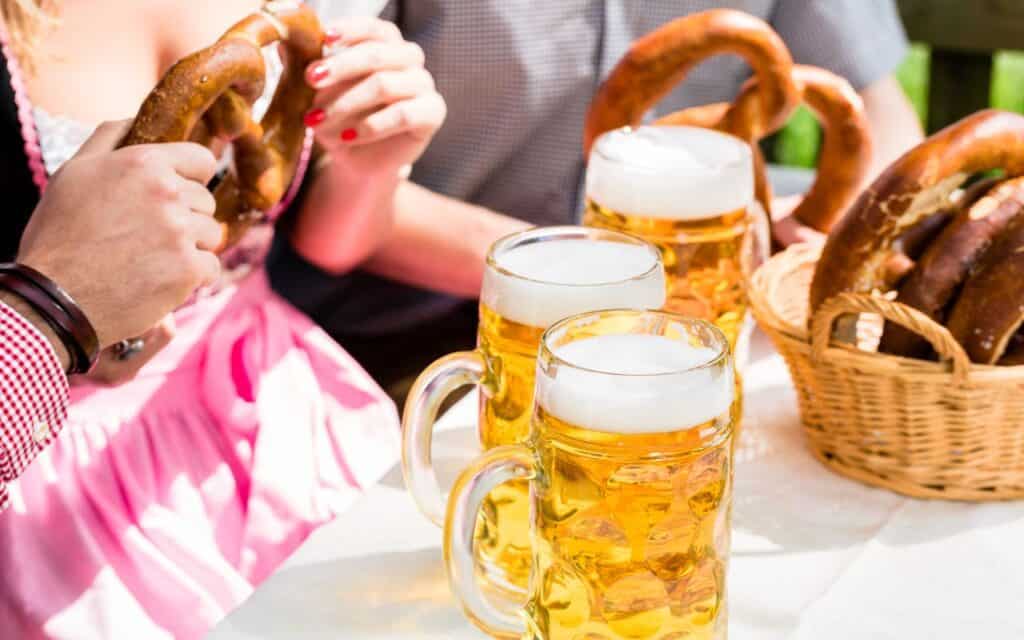
Did you know that there are over 1300 breweries in Germany and more than 7000 varieties of beer in that country? Of course, we won’t talk about each one of them. But today, we will talk about several different styles of German beer. Some of the beer styles in Germany are already popular and you can find it easily anywhere.
Hefeweizen
When it comes to ales, Germany is renowned for its wheat beers, with Hefeweizen being the most popular. This type of beer is typically served in tall, narrow glasses that resemble flower vases. Its cloudy appearance is due to the unique top-fermenting yeast used during brewing, giving it a distinctively rich taste and intense clove-like aromas.
Hefeweizen is known for its incredible refreshment factor. In many ways, it can be considered the original hazy beer, characterized by its unfiltered and yeasty nature. The fermentation process often produces ester-y flavors like banana or even bubble gum, adding to its unique appeal.
Darker variations of this ale are referred to as dunkelweizen, meaning “dark wheat.” Dunkelweizens offer a delightful combination of caramelly and dark-fruit flavors, reminiscent of the taste of liquid banana bread for some beer enthusiasts.
Pilsner and Helles
German Pilsner is a light and crisp lager inspired by the Czech version of the same name. Brewed primarily from barley malt, it boasts a balanced flavor profile, with a flowery, herbal, and spicy hop bitterness harmonizing with a moderately malty base.
The concept of German Pilsner emerged in the 1870s, stemming from the original Czech Pilsner developed by Bavarian brewer Josef Groll. While the style originated in the Czech city of Plzeň, the German version was refined post-World War II with the introduction of modern brewing techniques and the utilization of local hops.
All-malt pilsners come in two variations: Czech (or Bohemian) and German. Both exhibit a pale yellow hue and culminate in a sharp bitterness accompanied by spicy, floral hop notes. German pilsners are generally lighter in body, drier, and slightly more bitter than their Czech counterparts, although both are designed to be refreshing and easy to drink.
Helles, another German take on the pilsner style, was developed as an early variation. Unlike the more hop-forward Czech pilsner, Helles leans toward a malt-driven profile, often presenting a sweeter taste experience.
Märzen or Oktoberfest
Oktoberfest and Märzen refer to the same type of lager beer and are often used interchangeably. This style of beer is most famously associated with Munich. Initially, it was called “Märzen” because it was traditionally brewed in March and served during October, as the name suggests.
The roots of this style can be traced back to the 1500s when Bavarian authorities banned brewing beer between April and September to ensure better quality. The warmer months posed a risk of allowing wild yeast and bacteria to thrive, resulting in spoiled beer.
Märzen lagers typically have an amber color. In the classic Märzen style, you won’t find much hop aroma or flavor, but rather a focus on showcasing malt flavors reminiscent of toast or bread crust. A subtle bitterness balances the brew and prevents it from tasting overly sweet. With its smooth malty character, Märzen is a delightful beer often enjoyed in large steins at lively beer halls.
Dunkel
Dunkel is a traditional style of dark lager from Munich, known simply as “dunkels,” which means “dark” in German. This type of beer is closely associated with Bavaria and Munich. It typically ranges in color from copper to dark brown, deriving its characteristic caramel-like and toasty flavors from Munich malt.
Dunkel beers usually have a dark amber to dark brown appearance. They are known for their smooth, medium-bodied texture, making them easy to drink without being too heavy. The brews in this category offer a subtle sweetness that is not overpowering. The flavor profile is distinctly toasted, often with hints of nutty and chocolate-like malt sweetness. The mouthfeel tends to be rich and slightly thick, while a mild bitterness or slight astringency may also be present. Some dunkels may have subtle buttery notes, although they are not the dominant flavor.
Weissbier
One of the most beloved German beer styles is a wheat-based ale, commonly enjoyed in Southern Germany. This top-fermented beer typically contains 5-5.8% alcohol, offering a refreshing and lively flavor. It is often served in tall, slender glasses.
German weissbier must be brewed with a minimum of 50% malted wheat, although many breweries use more than the required amount. These beers are fermented with specific yeast strains that contribute to their characteristic aromas of clove, banana, smoke, and sometimes even bubble gum. Weissbiers generally have a malty and subtly bitter taste. While traditional bottle fermentation was common, it has become less prevalent in modern brewing practices.
It’s important to note that Weissbier is distinct from Berliner Weisse, as it lacks the pronounced acidity and sourness of the latter. However, Weissbier does often exhibit a phenolic (clove-like) and estery-fruity (banana) aroma resulting from the yeast used during fermentation.
Bock
If you come across a beer featuring a goat on its label, chances are it’s a Bock. These beers can vary in color and are generally stronger than Pilsners, typically ranging from 6.3 to 7.5 percent alcohol by volume (ABV). They often exhibit a sweet, bready-yeasty flavor, which can be attributed to the Munich malt used during the brewing process.
The origins of Bock beers can be traced back to the town of Einbeck, which lent its name to these brews. The term “Bock” is a playful nod to this, as the pronunciation of “Einbeck” in German sounds similar to “Ein Bock,” which translates to “a billy goat.”
Doppelbock
The Doppelbock is a stronger and maltier version of the Bock beer. Hailing from Munich, this potent brew can be thought of as the imperial counterpart to the standard Bock. Its roots can be traced back to the days when it was affectionately called “liquid bread” by the Friars during periods of fasting. These robust and malty beers often boast alcohol by volume (ABV) exceeding 10%, showcasing flavors reminiscent of candied fruits and minimal hop influence.
Initially crafted by the monks at the Paulaner brewery in Munich, the Doppelbock boasts a rich and indulgent taste, characterized by caramel and a sugary flavor profile. Some variations of this beer may even exhibit hints of chocolate or fruit, making it an excellent choice for unwinding after a long day.
Weizenbock
Weizenbock is a classic German beer style renowned for its unique blend of bock beer and wheat beer qualities. It features a robust malt flavor, often accompanied by subtle hints of banana and clove, which arise from the specific yeast used during fermentation. Essentially, it can be thought of as the “wheat” version of Bock and Doppelbock, combining the best of both worlds.
Traditionally, Weizenbocks are presented as dark, weighty beers that bring together the delightful wheat and yeast flavors of a Weissbier with the rich maltiness characteristic of a German Bock variety. Some experts view the modern Weizenbock as a fusion of Weissbier and Doppelbock, with a significant portion of wheat in the grist and the use of top-fermenting Weiss yeast, resulting in a rich maltiness akin to a bottom-fermented doppelbock.
Brewed with a substantial amount of wheat malt, Weizenbocks boast a full-bodied, creamy texture that sets them apart. They often contain higher alcohol content compared to regular wheat beers, making them a bold and flavorful choice for beer enthusiasts.
Kölsch
Originating from Cologne, Germany, Kölsch-style beer provides a refreshing and crisp drinking experience that caters to both casual beer enthusiasts and seasoned connoisseurs.
Kölsch beer is known for its light-bodied and crisp nature, featuring a delicate hint of malt sweetness and light hop bitterness in a well-balanced manner. It shares some similarities with Pilsner beer but distinguishes itself with a light, subtle fruitiness in its flavor profile. In essence, Kölsch is a bit smoother and more nuanced in its taste.
Gose
Gose is a type of beer that originated in Goslar, Germany. It is a light wheat beer that is usually the color of pale straw and has a cloudy appearance. Unlike most beers, it didn’t use yeast in the fermentation process. Instead, the mixture was cooled in open-air vats, exposing the grain to bacteria in the air for spontaneous fermentation. Today, gose is made with warm-fermenting yeast. The addition of lactobacillus bacteria creates its characteristic sour flavor. At least half of the grain used for gose is usually malted wheat. It also includes coriander and yeast, making this beer something of a rule breaker.
Gose has a distinctive salty and sour flavor that’s not to everyone’s taste. It has a lemon sourness, an herbal characteristic, and a strong saltiness (the result of either local water sources or added salt). It’s medium-bodied with low levels of bitterness. Modern versions of gose often include fruit-flavored syrups to balance the sourness.
You can easily find German-style beer in grocery stores or bars, but most of them are mass-produced. You might feel that something is missing when you drink them. How about trying German-style craft beer in Indonesia?
Consider Canard Brewing Co.’s craft beer selection, which includes Strawberry Gose, Kölsch, and Weizenbock. You can experience the authenticity of good craft beer with Canard’s commitment to quality. We only use the best ingredients, the most authentic processes and recipes, and the highest standards of packaging to serve the best craft beers in Indonesia. Try our best-brewed beer here.
Are you a fan of wheat beer? Many of our beer-loving friends surely enjoy wheat beer, right? Wheat beer is a refreshing and well-liked type of beer that has been around for many, many years.
Key Takeaways
- Wheat beer is brewed with a significant amount of wheat, along with barley, hops, and yeast
- There are a lot of wheat beer types, such as hefeweizen, weissbier, and witbier.

For those who might not be familiar with wheat beer, the main thing to know is that it’s brewed with a higher amount of wheat compared to the usual malted barley used in beer-making. Besides that, there are various styles within this category, each bringing its unique flavors to the table.
In this article, we’ll be delving into wheat beer, discussing what it is, its characteristics, its history, and the different types of wheat beer styles. Let’s dive in and explore!
What Is a Wheat Beer?
As the name suggests, wheat beer is brewed with a significant amount of wheat, along with barley, hops, and yeast. Originating in Bavaria, wheat beer is typically a top-fermented ale that incorporates at least 30 percent wheat during the brewing process. This results in a beer with a cloudy appearance and a smooth, gentle texture, often carrying hints of banana, clove, bubble gum, and spice.
Wheat beers generally have a light color, with a low to medium alcohol content, and can appear either cloudy or clear. Depending on the specific type, they may be brewed with or without hops and tend to lack bitterness, making them easily drinkable and enjoyable for many people.
When most people think of wheat beer in the world of beer, they are likely referring to what is also known as hefeweizen, which originally came from Bavaria, Germany. Hefeweizen is a cloudy, golden-colored beer renowned for its distinct flavors of banana and clove, which are derived from the yeast used during the brewing process.
Characteristic of Wheat Beer
Wheat beer is a unique type of beer that’s made using a significant amount of wheat along with malted barley. This special brewing process gives wheat beer its own distinct set of characteristics that make it stand out from other types of beer.
In terms of appearance, the beer is generally light in color, varying from pale straw to golden yellow. It can either be cloudy or clear, depending on how it’s brewed. Additionally, wheat beer carries a distinct aroma often described as spicy, fruity, and sometimes even citrusy.
What makes wheat beer truly special is its one-of-a-kind flavor profile. It’s usually light and refreshing, with a creamy texture and a crisp finish on the palate. The use of wheat during brewing can add a slight sweetness, while the inclusion of hops can bring a subtle bitterness. Depending on the yeast strain and spices used, wheat beer can also have a fruity or spicy taste.
Compared to other beer styles, wheat beer generally has a lower alcohol content, making it a popular choice for those seeking a light and refreshing drink. Traditional German-style wheat beers, like hefeweizens, typically contain around 4% to 5% alcohol, while American-style wheat beers can range from 4% to 7% alcohol content.
Also read: Beer Indonesia In a Nutshell: The Story of Indonesian Beer Culture
Origin and History of Wheat Beer
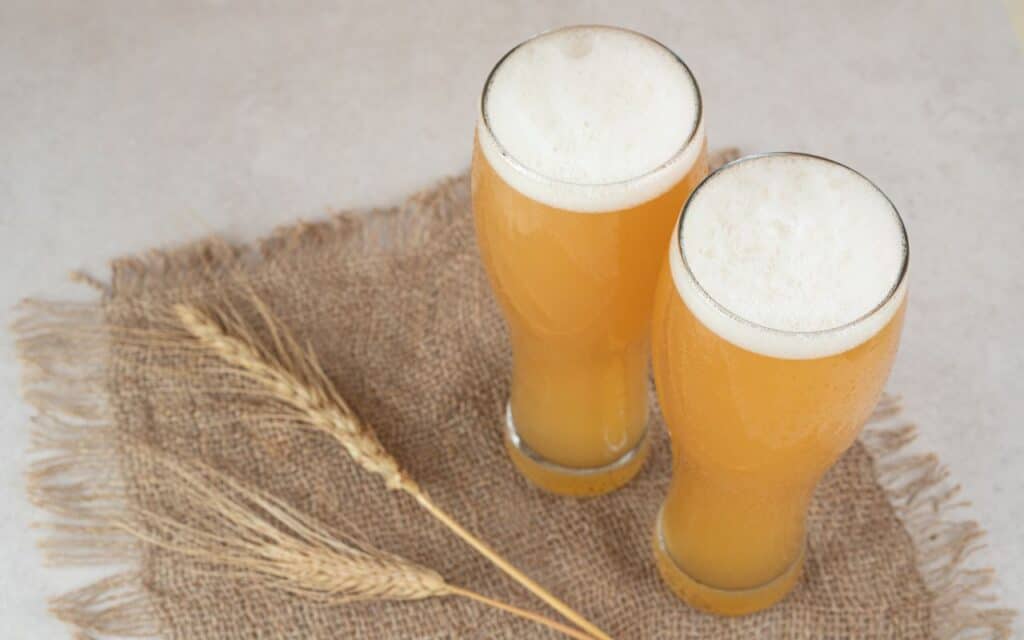
According to Sumerian records, people began brewing beer with spelt, a type of wheat, over 8000 years ago. This indicates that the earliest known beers were essentially Wheat Beers.
In Europe, evidence of brewing using wheat dates back to 800 B.C. in what is now modern-day Germany, specifically Bavaria. The ruling Degenberger family is credited with pioneering the brewing of the first wheat beers in the region. Initially, the beer was crafted for the royal court and was referred to as Weissbier, which translates to “white beer” in German.
During the Middle Ages, wheat beers gained immense popularity in Bavaria. However, in the 15th century, war and crop failures led to a significant scarcity of raw materials. As bread took precedence over beer, the Reinheitsgebot was established, prohibiting the use of wheat in beer production. While some exceptions were made, this regulation resulted in barley becoming the more prevalent ingredient. It wasn’t until the late 20th century that wheat beers regained popularity.
Meanwhile, in Belgium, Witbier became a significant style across the country in the 16th century, as brewers began experimenting with increased wheat content. Despite facing near extinction, it was revived in the 1950s and has since gained popularity globally within the modern craft beer scene.
Types of Wheat Beer
Hefeweizen
Hefeweizen is a type of German wheat beer renowned for its cloudy look and unique flavors of banana and clove. It’s composed of over 50% wheat and tends to have a low hop bitterness. This beer is ideally served in a tall, slender glass to highlight its hazy appearance.
Weissbier
Weissbier is a German wheat beer that shares similarities with Hefeweizen but has a clearer look. It’s also made with a minimum of 50% wheat and generally has a low hop bitterness. Weizen boasts a light and refreshing flavor, making it a favored option, especially during the scorching summer months.
Witbier
Witbier, which means ‘white beer,’ gets its name from its pale and slightly cloudy appearance. Brewed with orange peel and coriander, Witbiers feature herbaceous and citrusy flavors that balance the smooth wheat base. These beers are perfect for enjoying during the summer season.
Also read: Different Types of Beer for You to Know Today
Our Witbier Recommendation for You to Enjoy

We talked about one of the wheat beer styles, which is Witbier. Did you know that you can find high-quality witbier in Bali?
At Canard, our Witbier boasts a pale straw hue, slightly hazy due to the presence of yeast and wheat malt. It greets your senses with a refreshing burst of citrus and lemon notes complemented by the subtle aroma of coriander. “Zesty” encapsulates the essence of this beer, which offers a silky, fruity, and creamy profile, effervescent on the palate. When enjoyed fresh, it delivers a refreshing lightness and concludes with a smooth finish, leaving no lingering bitterness on the palate.
If you want to find the best craft beers from a brewery in Indonesia, consider trying Canard Brewing Co. We serve the best of both brewing and ingredients. Visit our website to discover more.